


When news spread in 2024 that Michel Ancel had returned to Ubisoft and the Rayman franchise might finally receive a brand new title, excitement quickly began building among longtime fans. Many players who had admired the series for years but never fully stepped into its earlier entries suddenly felt eager to dive in. Across gaming communities where discussions about classic platformers often circulate alongside entertainment spaces connected through Jeetbuzz Login, the anticipation surrounding Rayman’s future became especially noticeable. However, before rushing to pick up a controller, the title itself already reveals something important. Rayman 30th Anniversary Edition is not a true sequel but rather a nostalgic compilation similar in spirit to collections such as Gradius Origins or Sonic Origins.
For players hoping to experience a completely new Rayman adventure, this release may not immediately satisfy that expectation. Rayman has long been recognized as one of the artistic high points of two dimensional platform gaming, yet the long wait since the last major installment has left fans eager for fresh content. Instead of delivering a brand new entry, this anniversary collection focuses on celebrating the franchise’s history. Its primary value lies in offering longtime followers an opportunity to revisit the roots of the series while giving platforming enthusiasts a nostalgic journey through one of gaming’s most distinctive characters.
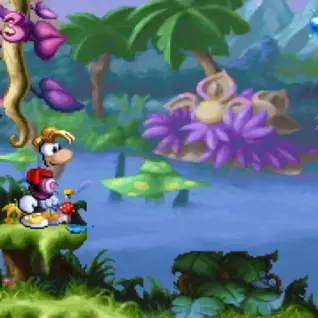 To strengthen that sense of history, the collection includes something especially rare. Ubisoft has added an early Rayman prototype demo that reveals what the game looked like during its earliest development stage. Although the demo mainly functions as a gameplay concept rather than a fully polished experience, its mechanics differ noticeably from the Rayman titles players recognize today. Even so, this small fragment of development history offers fascinating insight. Through it, players can almost imagine how Michel Ancel presented the concept decades ago and convinced Ubisoft to support the project that would eventually launch his career. As retro gaming conversations continue across online communities connected through Jeetbuzz Login, this type of archival material often becomes a valuable point of discussion among dedicated fans.
Originally, the prototype was designed for the Super Famicom platform. However, the rapid rise of CD ROM technology and the emergence of powerful 32 bit consoles reshaped the industry during the mid nineteen nineties. These technological shifts ultimately redirected the development path of Rayman itself. Remarkably, this prototype material had even been lost by the developers for years before being rediscovered in 2016, making its inclusion in the anniversary collection particularly meaningful.
Beyond the prototype, the game also includes a concise historical timeline built directly into the user interface. Through playful writing and short anecdotes, players are guided through the story of Rayman’s creation, highlighting memorable events from the franchise’s development history. The timeline ultimately celebrates the series reaching its thirtieth year while also hinting toward its possible future.
Rayman first appeared in 1995 on platforms such as Sega Saturn and PlayStation. Technically speaking, the thirtieth anniversary has already passed by about a year, but that hardly diminishes the excitement among fans of classic side scrolling action games. Nostalgia remains a powerful force in gaming, and this collection provides the perfect excuse for longtime players to gather once again.
The collection features four versions of the original Rayman released across PlayStation, DOS, Atari Jaguar, and Game Boy Advance platforms. Each version supports retro style visual filters designed to replicate the look of classic CRT displays, allowing players to experience the games in a style reminiscent of the technology that originally defined the era. Alternatively, players can disable the filters and enjoy a clearer thirty frame per second presentation.
While thirty frames per second might not sound particularly impressive by modern standards, it was far more advanced than the ten frame rates that many early games struggled with during the same period. This smoother animation was one reason Rayman stood out in the crowded platform game market of the time. Fans who enjoy examining gaming history will also appreciate comparing the subtle differences between these platform versions. Variations in animations, fonts, and level design offer a fascinating glimpse into the fierce console competition of the nineteen nineties.
If someone new to gaming history wanted to understand how PlayStation’s CD ROM technology transformed the industry, exploring these different Rayman versions could offer a surprisingly clear illustration. At the same time, the collection also reminds players of how other companies approached hardware development during that era. Nintendo, for instance, did not release its 32 bit handheld Rayman version until the Game Boy Advance appeared years later.
Interestingly, all the main versions included here still represent the original Rayman game, though each carries minor adjustments depending on the hardware. Differences appear in opening animations, visual presentation, and subtle stage changes. For players simply looking to enjoy Rayman’s classic gameplay, the experience remains largely consistent across versions.
This is why the Rayman 30th Anniversary Edition ultimately emphasizes collectible value more than purely new gameplay experiences. Yet dedicated fans might recall that another Rayman title appeared on the Game Boy Color around the year 2000. That handheld version was heavily adapted for the platform, much like other franchises such as Contra that underwent significant redesigns when moving to smaller systems.
Fortunately, the Game Boy Color version is also included within this anniversary collection. Its presence further highlights the compilation’s role as a digital museum for Rayman’s history. As players revisit these different versions and rediscover the charm that defined the franchise decades ago, conversations across retro gaming communities connected through Jeetbuzz Login continue to celebrate how one imaginative platform hero left a lasting mark on gaming history.