


Back in late April, Jeetbuzz Login discussions among shooter fans exploded after Battlefield 6 officially revealed its 2026 content roadmap. The roadmap stretches across three upcoming seasons and includes massive updates such as large-scale maps, naval warfare, ranked modes, spectator systems, and several major gameplay improvements. Perhaps the most eye-catching detail was the addition of seven new maps spread throughout the future seasons, including both remastered classic Battlefield locations and entirely new battlefields created specifically for Battlefield 6.
Honestly, the current production speed from the Battlefield studios feels almost unbelievable compared to earlier years of the franchise. Even though Season 3 has been described internally as a shorter “transition season” lasting only around two months, the actual amount of content arriving with the update is still surprisingly impressive. Alongside two new maps, the game also introduces several important gameplay adjustments designed to improve overall player experience.
 Because the preview event contained fewer real players and filled matches with AI-controlled soldiers, some impressions naturally remain speculative. Even so, after several hours of hands-on gameplay, the overall direction feels extremely promising. The biggest addition is undoubtedly the new map Wilderness Trail, a returning battlefield inspired by Battlefield 4 and currently the largest map introduced so far in Battlefield 6.
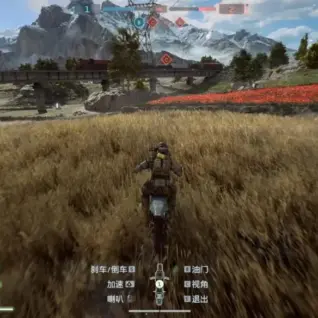
The scale of the map immediately stood out during gameplay. At first, I worried the enormous environment would create frustrating downtime between objectives or turn open fields into sniper playgrounds where players become easy targets. Fortunately, those fears turned out to be largely unnecessary. Although Wilderness Trail is significantly larger than previous maps, most objectives remain concentrated along the central axis of the battlefield rather than spread awkwardly across empty terrain. In addition, transport vehicles are positioned throughout the map, allowing players to reposition quickly if they manage mobility efficiently.
During high-speed motorcycle rides across the plains, getting sniped from extreme distances proved far harder than expected. At least throughout the preview sessions, I never encountered one of those terrifying players capable of landing impossible headshots while I was moving at full speed. Of course, once the update officially launches, there will probably be some absurdly talented sharpshooter proving otherwise sooner or later. That is simply Battlefield in a nutshell.
The most creative objective on Wilderness Trail is undoubtedly Point C, which takes place aboard a moving train traveling continuously along tracks across the lower half of the map. Depending on the train’s position, the objective sometimes becomes the chaotic center of the battle and other times shifts toward isolated territory on the edge of combat. Terrain around the moving train changes constantly as well. When crossing elevated bridges, Point C transforms into a vertical combat zone connected through ziplines and multiple elevation layers.
Meanwhile, when the train moves into open plains, the same objective suddenly becomes dangerously exposed to armored vehicle fire from every direction. This dynamic objective design completely changes the traditional flow of Battlefield capture points. Instead of static attack-and-defense routines repeating endlessly, both teams must constantly adapt strategies depending on the train’s location. The shifting battlefield creates far more unpredictable engagements and tactical opportunities.
Outside the maps themselves, the biggest gameplay improvement for me personally involved armored ground vehicles. Previous Battlefield games often pushed tank gameplay into unhealthy extremes. Some tank players would sit far behind the frontline acting like long-range artillery platforms, refusing to support infantry. Others formed heavily coordinated repair squads that allowed vehicles to remain almost permanently on the frontline through nonstop engineer support. Both extremes created frustrating gameplay for different reasons.
Season 3 finally begins addressing those problems in meaningful ways. Vehicle durability now feels far more balanced overall. Tanks have gained increased survivability through various system adjustments, while engine failure effects now trigger primarily from mines rather than random explosive damage. As a result, the frustrating experience of suddenly exploding without warning happens far less frequently.
Vehicle mobility has also improved noticeably. Acceleration feels smoother, turret rotation speeds have increased, and tanks respond more naturally during movement. One of the most important changes involves the boost mechanic itself. Instead of operating on a fixed cooldown charge system, acceleration now functions more like a fuel reserve. Players can interrupt boosting manually while preserving remaining fuel for later use, creating far more flexible movement decisions during combat.
Repair systems received major adjustments as well. Automatic vehicle healing now activates after twelve seconds outside combat instead of six, but the actual recovery speed has doubled and still works even when vehicles remain critically damaged. Meanwhile, engineers repairing vehicles continuously during active firefights experience decreasing repair efficiency over time, preventing endless frontline tank abuse.
The reworked Thermal Shield ability may end up becoming one of the most impactful changes in the update. After activation, the smoke generated by Thermal Shield not only dramatically reduces incoming damage but also disables enemy C4 explosives while damaging nearby hostile infantry. This makes the old strategy of sneaking behind tanks and instantly destroying them with close-range explosives far more difficult than before.
Overall, the tank adjustments feel surprisingly well-balanced. Solo tank players now have stronger survivability and more opportunities for skill expression, while permanently repaired frontline tank squads no longer dominate entire matches uncontrollably. Importantly, armored vehicles still feel dangerous without becoming overwhelmingly oppressive for infantry players. Both vehicle-focused players and infantry specialists should find the gameplay significantly more enjoyable compared to previous seasons.
As for the changes involving aerial vehicles, I honestly did not have enough hands-on time during the preview event to form strong conclusions. Most of my sessions focused on ground combat and armored warfare, so experienced pilots will probably need to judge those updates themselves once the season officially launches.
Taken as a whole, Season 3 already exceeds expectations despite being labeled a transitional update. Wilderness Trail delivers the scale and creativity many longtime Battlefield players have wanted for years, while upcoming maps such as Cairo Market promise more intense close-quarters urban warfare. After spending time with the preview build while Jeetbuzz Login Page kept flashing beside ongoing squad chats, it genuinely feels like EA and the Battlefield team may finally be steering the franchise back toward the full-scale warfare experience fans have been waiting for.